Featured

Dogme 95

In 1995, two Danish filmmakers joined together for 45 minutes to form what would be the basis for one of cinema’s most transgressive and minimalistic movements.

The two filmmakers in question, Lars von Trier and Thomas Vinterberg, collectively decided that the current state of cinema was not good enough. That the films being released were fake; illusions designed to trick the audience into thinking everything on-screen was real. But to von Trier, Vinterberg and Dogme as a whole, film wasn’t an illusion.
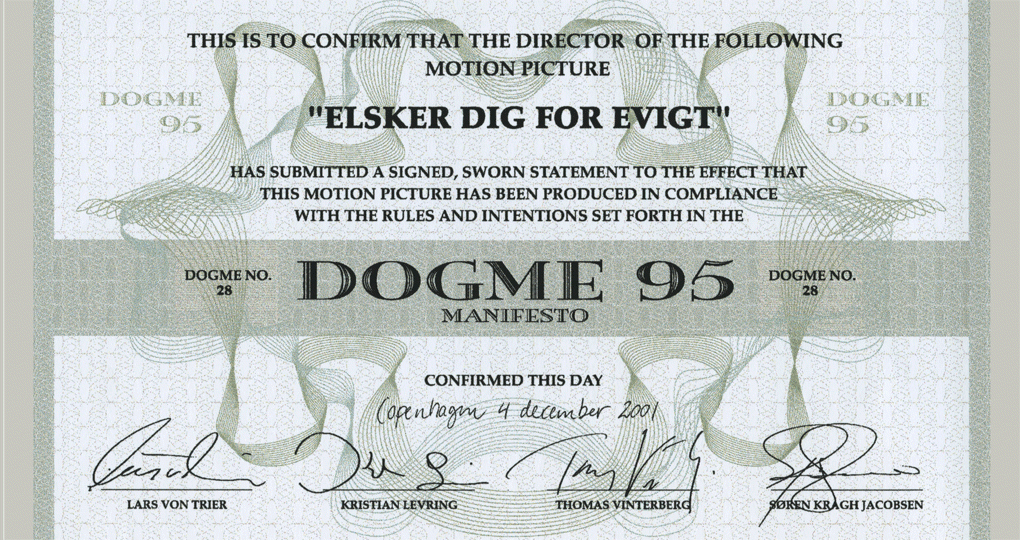
The aim of Dogme 95 was to create films that felt real; that didn’t rely on special effects, or even use artificial lighting. To achieve this sense of realism, a set of rules were established, known as ‘The Vow of Chastity’. These rules laid the groundwork for the 35 films made under the Dogme 95 moniker. A few of the rules the vow laid out was that all films must all be shot on location with no use of sets; all props must be available at the location. The sound must always be a part of the scene; no music unless it occurs in the scene. And the film must take place in the here and now, meaning the story cannot take place in the past or future and it must be filmed where the filmmaker is based.

These elements helped to create a series of films that felt real, whilst also looking incredibly low-budget and quite amateurish. Nowhere is this more prevalent than with Lars von Trier’s Idioterne, known in English as The Idiots.

The film details the life of a commune of deeply troubled people, who act as though they are developmentaly disabled, as they view their behaviour as a way to detach themselves from the society they see as being as being as stupid as they act.

This film is not comfortable to watch, nor is it a visually pleasing film to watch. The contents of the film, from the way the characters behave, to the rather sudden and completely uncensored sex scene, even the crude and unsteady cinematography, are completely transgressive; something you would not find in a typical Hollywood production. It pushes the boundaries of what can and cannot be shown in film, though it can still come across as quite offensive, certainly uncomfortable.

While the intent behind Dogme is most certainly intriguing, not everyone can appreciate the films the movement has produced. The Idiots was dismissed as a joke at the Edinburgh film festival and was booed and heckled at the Cannes film festival. While the artistic motive behind Dogme can be appreciated by some, others can only loathe the unprofessional and rather offensive nature of the movement.

Dogme 95 occupies a short space in time, 10 years to be exact. By the end of the movement, Dogme had ended up becoming a genre of its own, something the movement was deeply against. And, in a way, that might be why Dogme can be so easily forgotten by most.

British Horror

During the first half of the 20th century, Hollywood was dominating the film industry, producing many big hits. The UK’s film industry was well established during this period, not to the same extent as Hollywood, but enough to garner international attention, with many British films being made during the 1930’s.

To combat Hollywood’s widening grasp on the film industry, the British parliament introduced the Cinematographic act in 1927. The aim of the act was to revitalise the British film industry, by making it law for exhibitors of film to show a quota of British-made films. This led to the release of many low-budget productions, very few of which were horror.

Hammer Film Productions are a British based film studio. Their history starts in 1934, during the build-up to World War 2. During this period, Hammer were not involved in any horror productions; their only output then was comedies and dramas. After the war broke out, production came to an immediate halt.

After production began again in the mid-40’s, Hammer continued to release similar movies to their pre-war filmography. It wasn’t until the release of ‘The Quatermass Xperiment‘ (1955) that their interests began to shift. Adapted from the 1953 BBC TV serial of the same name; Quatermass became a surprise hit, possibly due to the x-rating the film received by the BBFC, meaning no one under the age of 16 could watch it.

This marked the beginning of Hammer’s focus on producing B horror movies. With such immediate titles as ‘The Curse of Frankenstein’ (1957) and ‘Dracula’ (1958) becoming quite large crowd-pleasers. These films also helped kickstart the cinematic careers of Peter Cushing and Christopher Lee, who appeared in many of Hammer’s productions.

However, while the audiences loved them, critics looked on in disdain and laughter. These films were considered quite cheesy for the time, especially compared to similar Hollywood productions of years prior. Of course, said Hollywood horrors appear aged gracefully themselves either.

As the 1970’s rolled around and the availability of colour televisions increased, the interest in cinema dwindled. Hammer, in an attempt to regain their audience, resorted to producing some rather outlandish films, such as ‘The Legend of the 7 Golden Vampires’. These attempts, however, weren’t enough to rekindle audience interest. This eventually led to Hammer indefinitely ceasing all cinematic productions from the 1980’s and onward. Hammer never officially shut down though, the company was simply on a long hiatus, until they saw a return to the big screen in 2010 with the critically acclaimed ‘Let Me In’ (2010).

The decline of Hammer’s popularity is a product of society’s shift from the cinema to the living room, but also due to Hammer’s inability to interest their audience with anything substantial. The tacky nature of their films was what drew people towards them; and what eventually drew them away.

New Zealand Film

The Lord of the Rings has become one of the biggest film series of all time, with the total box office for the first 3 films set at nearly $3 billion and its influence on the film and even television industry being endless. These films were huge and to this day, they remain as the most successful films in the history of New Zealand cinema.

The film industry in New Zealand wasn’t like Hollywood; it wasn’t built to be a money mine for the rich. There were films being made in New Zealand during the early 1900’s, however they were much smaller in scale and many of them, including the supposed first film ever made there, ‘Hinemoa’, have no existing copies, making them lost films. It wasn’t until the 1970’s and the founding of the New Zealand Film Commission that the film industry in New Zealand start to take off.

The first major film from New Zealand was 1977’s ‘Sleeping Dogs’, an action thriller about a fictitious political revolution against a fascist government. The film was directed by Rodger Donaldson and stared then-upcoming actor and filmmaker, Sam Neill, most famous for his role as Dr Alan Grant in the 1993 Spielberg movie, ‘Jurassic Park’.

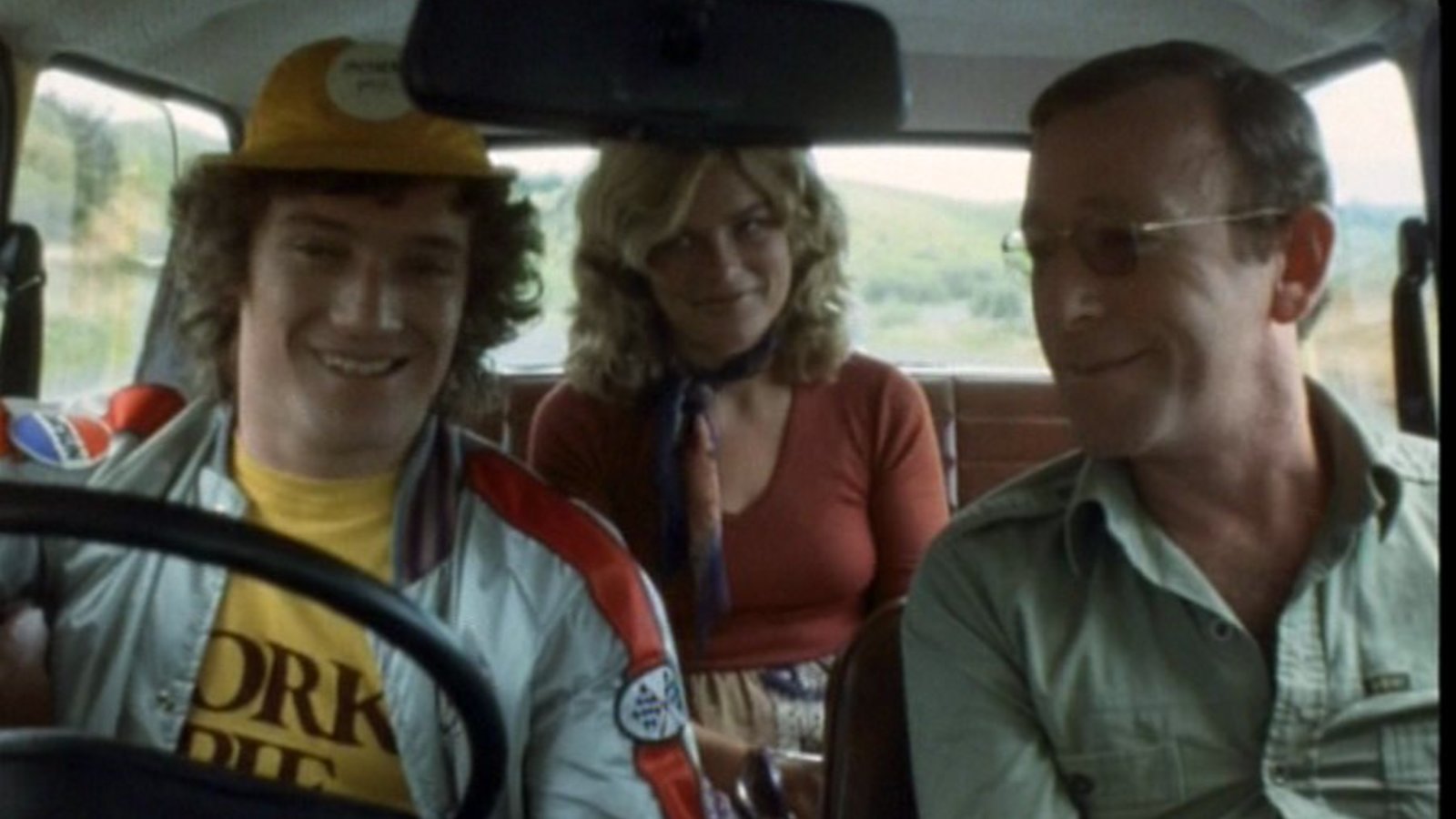
This was followed up by New Zealand’s next big success, Geoff Murphy’s ‘Goodbye Pork Pie’, released in 1981. This film was nothing like ‘Sleeping Dogs’. Instead, it was a comedic road trip film two guys running from the law in a yellow Mini. ‘Goodbye Pork Pie’ continued the legacy of ‘Sleeping Dogs’, by further increasing New Zealand’s interest in film and becoming a smash hit in its home country.

After 1981, New Zealand’s film output increased massively, with a large influx of films throughout the 80’s and into the 90’s. Two standout films from this period being Jane Campion’s ‘The Piano’ and Lee Tamahori’s ‘Once Were Warriors’. Both were heavily praised inside and out of New Zealand, with ‘The Piano’ winning multiple awards, including three Academy awards.

The frequency of films being made in New Zealand only grew larger in the 2000’s. In fact, the films released from the 2000’s into the 2010’s make up half of the number of films made in New Zealand. The increased interest in filmmaking could be attributed to Peter Jackson’s ‘Lord of the Rings’ adaptations mentioned earlier, as they were massive money-makers for both the studios responsible for making them, and for New Zealand itself, with a huge increase in tourism since the Lord of the Rings first released in cinemas.

Whatever the reason, the rise in film’s popularity in New Zealand has led to many young filmmakers getting more and more recognition outside of the country. Filmmakers like Taika Waititi, who is responsible for directing films such as ‘Boy’ (2010), ‘What We Do in the Shadows’ (2014) and was most famously responsible for directing the Marvel product, ‘Thor Ragnarok’ and the upcoming sequel, ‘Love and Thunder’.

New Zealand’s film industry is an interesting one. It only established itself proper nearly 50 years ago, but it still manages to create many great films that rival the level of quality many people expect from big-budget Hollywood titles, which is a wonderful feet to achieve.

Czech New Wave

Jan Svankmajer is a surrealist filmmaker and animator from the Czech Republic, formerly Czechoslovakia, with a career that spans over 55 years, with all his work between 1964 and 1988 being short films.

At the start of his career, Czechoslovakia was under the Soviet Union’s control and with that came several hurdles Svankmajer had to overcome, mostly involving censorship. He was banned from making films for 8 years by the Soviet government in 1972. It was not until the ban had been lifted that Svankmajer began work on his first feature film; an adaptation of a beloved children’s story.

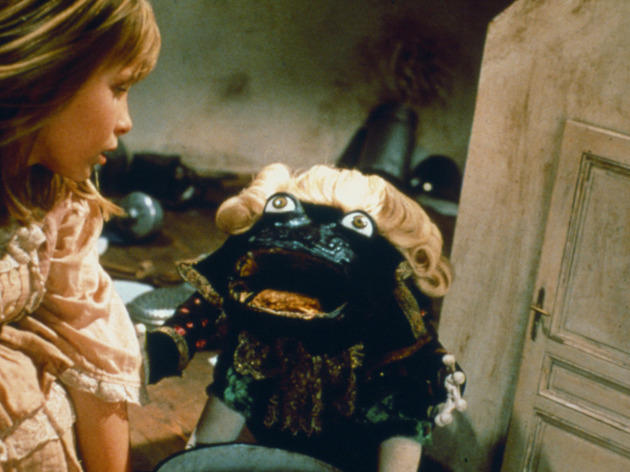
Neco z Alenky’, known simply as ‘Alice’ in English, is terrifying.

As soon as the film begins, it sets a very unsettling atmosphere. The film opens with slow, quiet shots of a running river, followed by the opening credits, which are accompanied with close-up shots of a little girl talking. This young girl, who I assume is Alice, acts as the film’s narrator and is the only voice you will hear throughout this entire experience. One of the first things she says is, “You will now see a film… made for children… perhaps”. It seems like such an odd way to start a film; there wouldn’t normally be a reason to start a film like this, but for ‘Alice’, there is a very good reason.

As the film continues, the audience will be exposed to some truly nightmarish imagery. The world of Wonderland that most people know of is bright, colourful and nonsensical, but in a charming way. This film, on the other hand, portrays Wonderland as a dark and foreboding world, filled with horrifying creatures. Svankmajer’s Wonderland is still nonsensical, seemingly more-so at times, but in a much more disturbing manner that can really get under your skin at times.

And lest it not be mentioned, the music, or more, the complete absence of it, bar the end credits. The only sounds you will be hearing in this film is the voice over and the quite unsettling sound effects. The sound of the scissors clashing is sharp and menacing and the shattering of plates, everything sounds so raw and natural, yet it still manages to create an uneasy feeling throughout the film. As for the narration, it is hard to say. The original Czech language version of the film is only available on the recent home video releases of ‘Alice’. The English version has a weird and quite laughable dub, clearly done with very little direction. Luckily, the narrator doesn’t speak that frequently, meaning very little dialogue and more time dedicated to the foreboding ambience of the film.

To classify ‘Alice’ as a children’s film would be horribly inaccurate. Most children would be scarred from watching this film. And yet, this film is still incredibly remarkable. The dolls look so natural, the scenery is decrepit and haunting, and the sound is sinister and raw. Everything about this film is so creepy, but that doesn’t stop it from being one of the most unique interpretations to one of the most beloved children’s stories ever told.

Design a site like this with WordPress.com
Get started